BASIC ELECTRICAL CONCEPTS
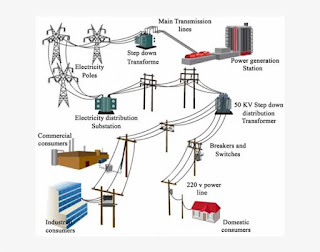
Basic electrical concepts In each plant, the mechanical movement of different equipments is caused by an electric prime mover (motor). Electrical power is derived from either utilities or internal generators and is distributed through transformers to deliver usable voltage levels. Electricity is found in two common forms: • AC (alternating current) • DC (direct current). Electrical equipments can run on either of the AC/DC forms of electrical energies. The selection of energy source for equipment depends on its application requirements. Each energy source has its own merits and demerits. Industrial AC voltage levels are roughly defined as LV (low voltage) and HV (high voltage) with frequency of 50–60 Hz. An electrical circuit has the following three basic components irrespective of its electrical energy form: • Voltage (volts) • Ampere (amps) • Resistance (ohms). 1. Voltage is defined as the electrical potential difference that causes electrons to fl...